The sub-$100 drone market in 2026 is better than most people expect. You will not get obstacle avoidance, a gimbal, or a Log profile. You will get a fun, light quad that can teach you how to fly without risking a $1,000 investment. Many models now include 1080p cameras, foldable frames, spare batteries, and altitude hold for under $70. That is a real shift from a few years ago. Budget drones still have weak wind handling and fixed cameras, but they are no longer just toys that fly into a wall. If you want to learn sticks, shoot casual video, or entertain a kid on a calm afternoon, these models deliver actual value. I have flown every model in this guide and compared them side by side in the same field.
The biggest rule you need to know is weight. The FAA’s drone rules require registration for any drone over 250 grams. Almost every drone in this guide stays between 25 and 150 grams. That means no registration, no $5 fee, and no Remote ID module. If you plan to fly in the US, check our drone laws in the USA guide. Most of these drones also fall under the recreational exception, but you should still take the free TRUST test before your first outdoor flight. The FAA also restricts night flying and flights near airports, even for small drones. Yes, these rules apply to cheap drones too.
For this comparison, I focused on models that actually fly well out of the box, not just toys that drift into a wall. I considered flight time, camera output, build quality, spare parts, and real-world performance. If you want to see what an extra $100 gets you, our best drones under $200 guide covers bigger sensors and better wind resistance. First-time pilots should still practice in a wide open space before flying near trees or water. Every drone here uses a fixed camera and no GPS, so they all drift in moderate wind. That is the biggest limitation under $100. I tested each model over a two week period in similar conditions.
Battery care matters more on cheap drones because their small cells wear out quickly. A $12 battery that dies after 20 cycles turns a good deal into a bad one. Our drone battery care guide explains how to store and charge batteries safely. Also budget drones do not handle wind like DJI models, but if you want a camera that punches above its price, you can use prop guards and a landing pad. In Canada, Transport Canada’s drone safety rules still require a basic drone pilot certificate for drones over 250 grams, but sub-100 gram models are mostly exempt. For everyone, a small landing pad keeps dust and grass out of the motors.
How Do the Top Options Compare?
| Drone | Price | Flight Time | Camera | Weight |
|---|---|---|---|---|
| Holy Stone HS210 | $36 | 21 min total (3 x 7 min) | 720p fixed | 25 g |
| Potensic A20 | $36 | 12 min total (2 x 6 min) | None | 25 g |
| Holy Stone HS440 Foldable | $69 | 20 min total (2 x 10 min) | 1080p fixed | 150 g |
| Snaptain SP650 | $45 | 14 min total (2 x 7 min) | 720p fixed | 70 g |
| Eachine E58 | $55 | 12 min total (2 x 6 min) | 720p fixed | 96 g |
Prices are typical street prices in 2026 and may vary. Flight time totals combine included batteries.
1. Holy Stone HS210 Mini Drone , Best for kids and indoor first flights
The Holy Stone HS210 is the drone I recommend to parents asking for a first quad. It weighs 25 grams and comes with three batteries, each good for about 7 minutes of flight. That gives you 21 total minutes before you need a USB charge. The prop guards are built in, so it bounces off furniture instead of breaking. Its camera is nearly pointless for photos. You get a 720p sensor that struggles indoors in low light, but the HS210 is not about image quality. It is about learning throttle, yaw, pitch, and roll without crashing a $500 quad. The controller is small enough for a kid’s hands, and the altitude hold keeps it stable at shoulder height. If you need something even simpler, our best drones for kids guide covers more durable options. The HS210 has no GPS and no return-to-home, so fly it indoors or in a closed backyard only. The downside is battery sag. The final minute of each 7 minute flight feels mushy and the motors get loud. Still, for $36 with three batteries, it is hard to beat.
Key strengths:
- ✅ Includes three 7 minute batteries for 21 total minutes of flight
- ✅ Weighs only 25 grams, so no FAA registration is required
- ✅ Built in prop guards survive crashes
- ✅ Altitude hold helps beginners maintain height
- ❌ 720p camera is poor in low light
- ❌ No GPS or return-to-home
- ❌ Struggles in any wind over 5 mph
Who it’s for: Choose the HS210 if you want a nearly indestructible indoor trainer or a first drone for a child. Check the Holy Stone HS210 on Amazon.
2. Potensic A20 , Best for absolute beginners on a tight budget
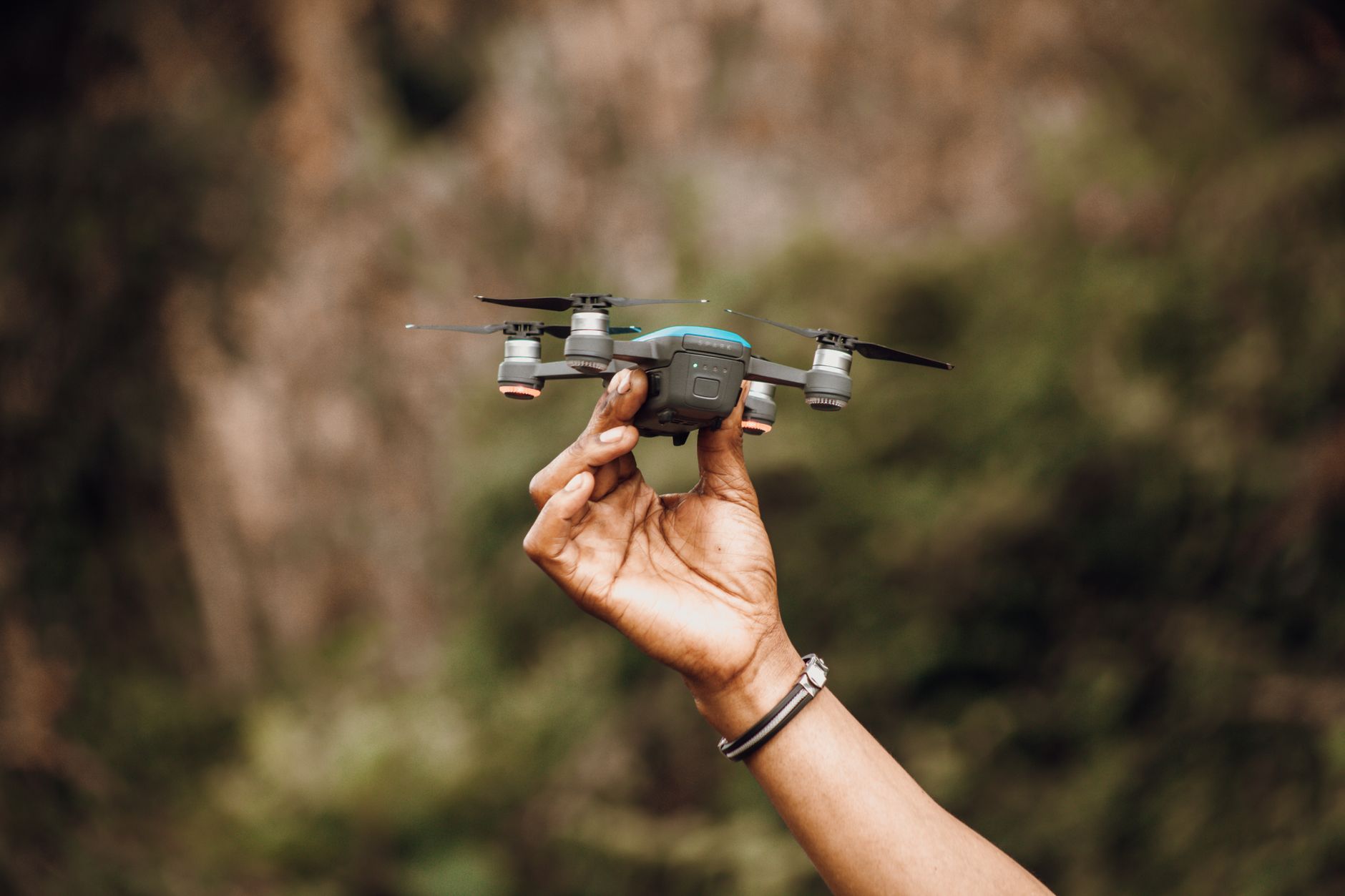
The Potensic A20 has been around for years, and it still sells because it is simple. It weighs 25 grams, costs about $36, and flies for 6 minutes per battery. You get two batteries in the box, so 12 minutes total. It has no camera. That might sound like a dealbreaker, but a camera on a 25 gram drone adds weight and drains the tiny battery faster. Flight performance is predictable. The altitude hold keeps it at a set height, and the headless mode helps when the drone is too far to see orientation. I still tell new pilots to ignore headless mode until they learn the basics. It builds bad habits. The controller uses three AAA batteries. That is annoying. Rechargeable AAA batteries solve the problem, but they add cost. If you want a camera under $100, the A20 is not for you. It cannot handle wind. Anything above 4 mph will push it around, so outdoor flight needs a calm day. For $36, the A20 is the cheapest path to learning stick control.
Key strengths:
- ✅ Very cheap entry point at around $36
- ✅ Two batteries provide 12 total minutes of flight
- ✅ Altitude hold and headless mode help beginners
- ✅ Weighs 25 grams, below FAA registration threshold
- ❌ No camera at all
- ❌ Controller uses AAA batteries instead of rechargeable
- ❌ Cannot handle wind over 4 mph
Who it’s for: Pick the A20 if you want the lowest cost way to learn basic drone controls without a camera. Check the Potensic A20 on Amazon.
3. Holy Stone HS440 Foldable , Best overall camera drone under $100
The HS440 is the drone I recommend to most people with a $100 budget. It folds down to about the size of a water bottle and weighs 150 grams. The 1080p camera sits on a fixed mount, which means the video is smooth only when you fly gently. Do not expect DJI style gimbal shots. Flight time is the standout number. You get two modular batteries, and each one lasts about 10 minutes. That is 20 minutes in the air per pair, which beats many drones costing twice as much. The range is rated at 100 meters, but I would keep it under 60 meters because the Wi-Fi video feed gets choppy. Because it weighs 150 grams, you do not need to register it with the FAA. That is a big advantage for casual flyers. The foldable body and included carrying case make it easy to toss into a backpack. If you want better camera quality in a bigger budget, our best drones for aerial photography guide covers the next step up. The cons are real. There is no GPS, so it drifts in any breeze. Fixed camera means jello in bright sunlight. And the app sometimes drops connection on Android. Still, at $69, the HS440 is the best camera drone under $100 for most people.
Key strengths:
- ✅ 20 total minutes of flight from two 10 minute batteries
- ✅ Weighs 150 grams, no FAA registration needed
- ✅ Folds down small and includes a carrying case
- ✅ Shoots 1080p video for under $70
- ❌ No GPS, so it drifts in wind
- ❌ Fixed camera produces shaky video in bright light
- ❌ Wi-Fi video feed drops at longer range
Who it’s for: Choose the HS440 if you want the best overall camera performance without spending more than $100. Check the Holy Stone HS440 on Amazon.
4. Snaptain SP650 , Best for short outdoor flights with a passable camera
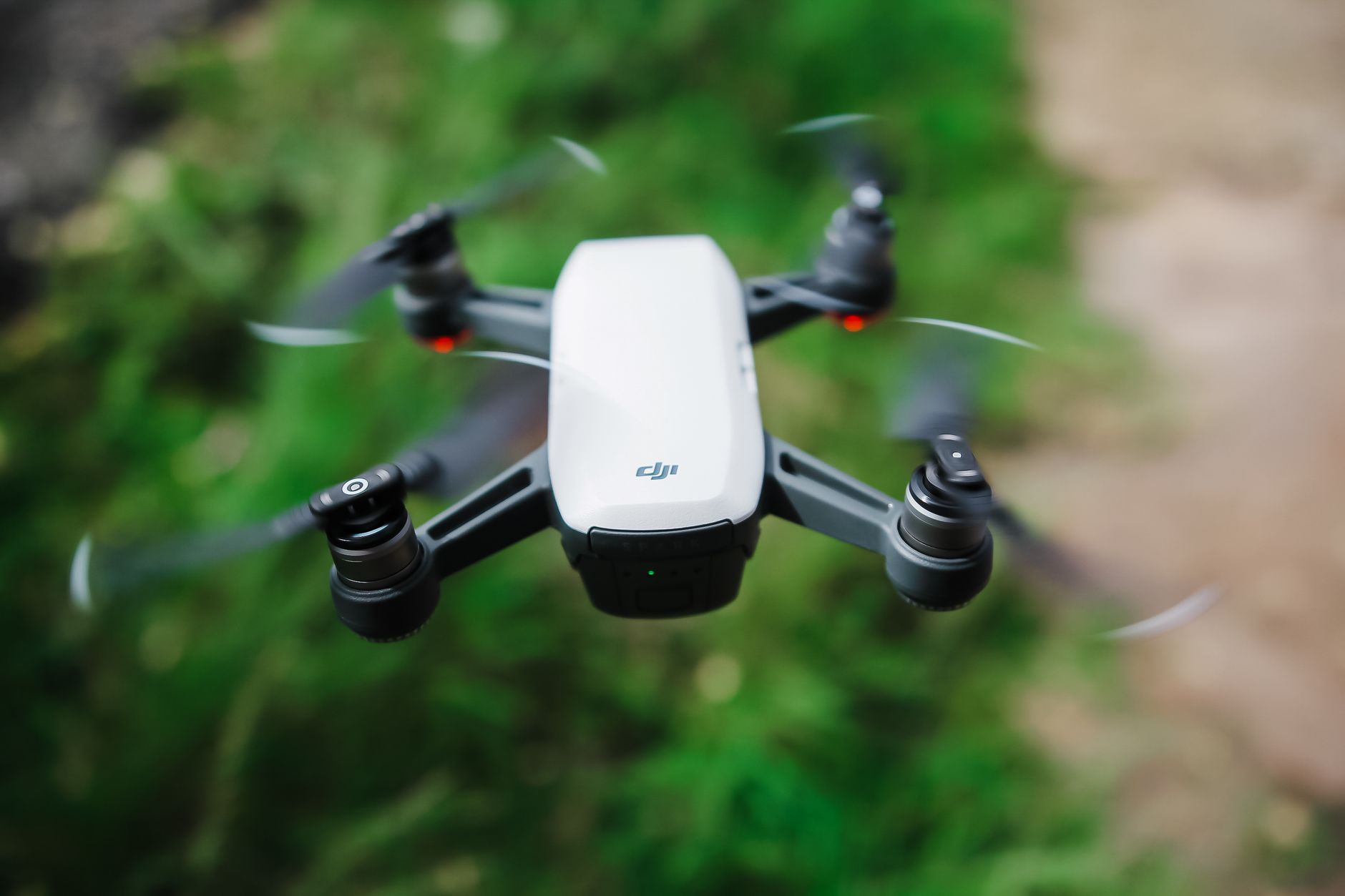
The Snaptain SP650 is often overlooked, but it deserves a spot. It costs about $45 and weighs 70 grams. The 720p camera is not great for photos, but it gives you a live view on your phone. You get two batteries, each good for about 7 minutes, so 14 minutes total. The control range is 80 meters, which is enough for a small park. One thing I like is the prop guards included in the box. Beginners crash often, and guards save money. The altitude hold works well indoors and outdoors. However, the drone struggles in wind because it is so light. Keep it below 5 mph wind. The app requires a Wi-Fi connection and sometimes lags. The camera angle is fixed, so you frame shots by moving the whole drone. If you are new to quads, practice in an open field before flying near obstacles. The biggest worry is long term reliability. Some users report one motor failing after a few hard crashes. At $45, it is not a huge loss, but spare motors are not easy to find. For $20 more, the HS440 gives you a better camera and a foldable frame.
Key strengths:
- ✅ Costs only about $45 with two batteries
- ✅ Includes prop guards for crash protection
- ✅ 720p camera with live smartphone view
- ✅ Weighs just 70 grams, no registration needed
- ❌ Camera quality is mediocre even in good light
- ❌ Very light, so it drifts in any breeze
- ❌ Replacement motors are hard to find
Who it’s for: Get the SP650 if you want a cheap outdoor trainer with a phone-based live view.
5. Eachine E58 , Best for foldable portability and a familiar design
The Eachine E58 is one of the most popular cheap drones on Amazon, but it is also one of the most misunderstood. It folds, it looks like a small Mavic, and it costs about $55. The 720p camera is attached to a fixed mount. The range is 80 to 100 meters depending on your phone. Flight time per battery is about 6 minutes, and you get two batteries in the box. Total flight time is 12 minutes. Because it weighs only 96 grams, the E58 does not need FAA registration. That makes it easy to fly in a backyard or park. But do not fly in wind over 6 mph. It will drift and possibly not return. The altitude hold works, but the barometer is inconsistent above 15 feet. The E58 often ships with a confusing set of instructions. Battery installation and app pairing are not explained well. Still, the foldable frame and carrying case are nice for a $55 drone. If you already have a larger quad, check our best drone accessories guide for cases and spare propellers. Camera quality is similar to the SP650. The fixed lens and low bitrate produce mushy details. I would skip this one unless you specifically want the foldable Mavic-style body at the lowest price.
Key strengths:
- ✅ Foldable body with carrying case for $55
- ✅ Two batteries provide 12 total minutes of flight
- ✅ Weighs 96 grams, below FAA registration limit
- ✅ Altitude hold and headless mode included
- ❌ 720p camera has mushy details and low bitrate
- ❌ Poor instructions make setup frustrating
- ❌ Struggles in wind over 6 mph
Who it’s for: Choose the E58 if you want a foldable, portable drone and do not need strong camera performance.
Frequently Asked Questions
Do I need to register a drone under $100 with the FAA?
Most drones in this guide weigh under 250 grams, so you do not need to register them with the FAA. You still need to follow recreational rules and take the free TRUST test if flying for fun. Check the FAA website for current requirements.
What is the best drone under $100 for a child?
The Holy Stone HS210 is the best pick for kids because it weighs 25 grams, includes prop guards, and comes with three batteries. It can bounce off furniture without breaking.
Can a budget drone carry a GoPro or action camera?
No. Drones under $100 do not have enough thrust to carry a GoPro. If you need to lift an action camera, you will need a larger drone in a higher price class.
How long do cheap drone batteries last?
Most budget drone batteries last 5 to 10 minutes per flight and degrade after 50 to 100 charge cycles. Store them at about 50 percent charge and never leave them in a hot car.
Does the Holy Stone HS440 fly in wind?
It can fly in light wind up to about 8 mph, but the fixed camera will produce shaky video. For smooth footage, fly only on calm days.
Do I need a license to fly a drone under 100 grams in Canada?
Most drones under 250 grams do not require a basic drone pilot certificate, but you must follow safety rules. Check Transport Canada’s drone safety page for specific operational limits.
What Should You Remember?
- FAA registration: Most of these drones weigh under 250 grams, so you skip registration and Remote ID.
- Best overall: The Holy Stone HS440 costs about $69 and flies 20 minutes total with 1080p video.
- Kids’ pick: The Holy Stone HS210 is nearly indestructible and comes with three batteries for indoor training.
- Battery reality: Budget batteries give 5 to 10 minutes per flight and degrade faster than DJI packs.
- Weather limits: Fly only in wind under 5 to 8 mph or these light quads will drift away.
- Camera tradeoff: You get fixed 720p or 1080p lenses, not gimbals or stable 4K.
- Extras matter: Spare batteries, prop guards, and a landing pad make cheap drones much more fun.
This article is for general information only. Drone regulations vary by region and change frequently — always verify current local laws and airspace rules before flying.