Follow-me drones used to be expensive tools for action sports teams. Today a $199 drone can lock onto a cyclist, a hiker, or a vehicle and film hands-free. The best models now combine visual tracking, GPS position hold, and obstacle sensors that keep the aircraft from clipping branches. That matters for solo creators who cannot fly and film at the same time. Before you buy any model, check the drone laws in the USA because the FAA’s drone registration rules apply to any drone over 250 grams. Staying legal is easier when you know the weight class you are shopping in.
We tested these drones for tracking reliability, video quality, battery life, and real-world usability. Flight time ranged from 16 minutes on a small selfie drone to 45 minutes on a larger dual-camera model. Camera sensors ranged from a 1/2-inch chip on budget models to a 1-inch sensor on the Air 3S. Price is another data point that separates the field. You can spend under $200 or over $1,000 depending on how polished you need the follow mode to be. Use our best DJI drones compared guide if you want the full DJI lineup before narrowing down to follow-me features.
Canadian pilots should review drone laws in Canada and Transport Canada’s drone safety rules before flying. The rules are similar to the FAA’s framework but have their own registration and pilot certificate thresholds. Follow-me mode does not remove the visual line-of-sight requirement in either country, so you still need to watch the drone. If you fly for a business, Part 107 in the US or an advanced operations certificate in Canada may be required. Knowing these rules before you spend keeps a fun gadget from becoming an expensive fine.
Battery life claims assume a new battery in mild conditions and no wind. Real-world follow flights are often shorter because tracking and obstacle avoidance draw extra power. Keep your packs healthy with our drone battery care guide. If you are new to hands-free flying, our best drones for beginners roundup explains which models skip the steepest learning curve. Follow-me drones are not a single category. A 135-gram budget drone and a 775-gram autonomous platform both follow you, but they serve very different jobs. The right pick depends on where you film and how forgiving the terrain is.
How Do the Top Options Compare?
| Model | Best For | Weight | Flight Time | Camera | Price |
|---|---|---|---|---|---|
| DJI Mini 4 Pro | Best all-around under 250g | 249 g | 34 min | 4K/60 HDR, 1/1.3-inch | Check price |
| DJI Air 3S | Best dual-camera follow drone | 724 g | 45 min | 4K/120, 1-inch + 70mm | Check price |
| HoverAir X1 Pro / ProMax | Best palm-launch selfie drone | 192 g | 16 min | 4K/60, 1/2-inch | Check price |
| Skydio 2+ | Best obstacle avoidance | 775 g | 27 min | 4K/60, 1/2.3-inch | Check price |
| DJI Neo | Best budget follow drone | 135 g | 18 min | 4K/30, 1/2-inch | Check price |
Prices are approximate USD and vary by bundle. Weights are standard takeoff weights. Always check local rules before flying.
1. DJI Mini 4 Pro , Best all-around follow-me drone under 250g
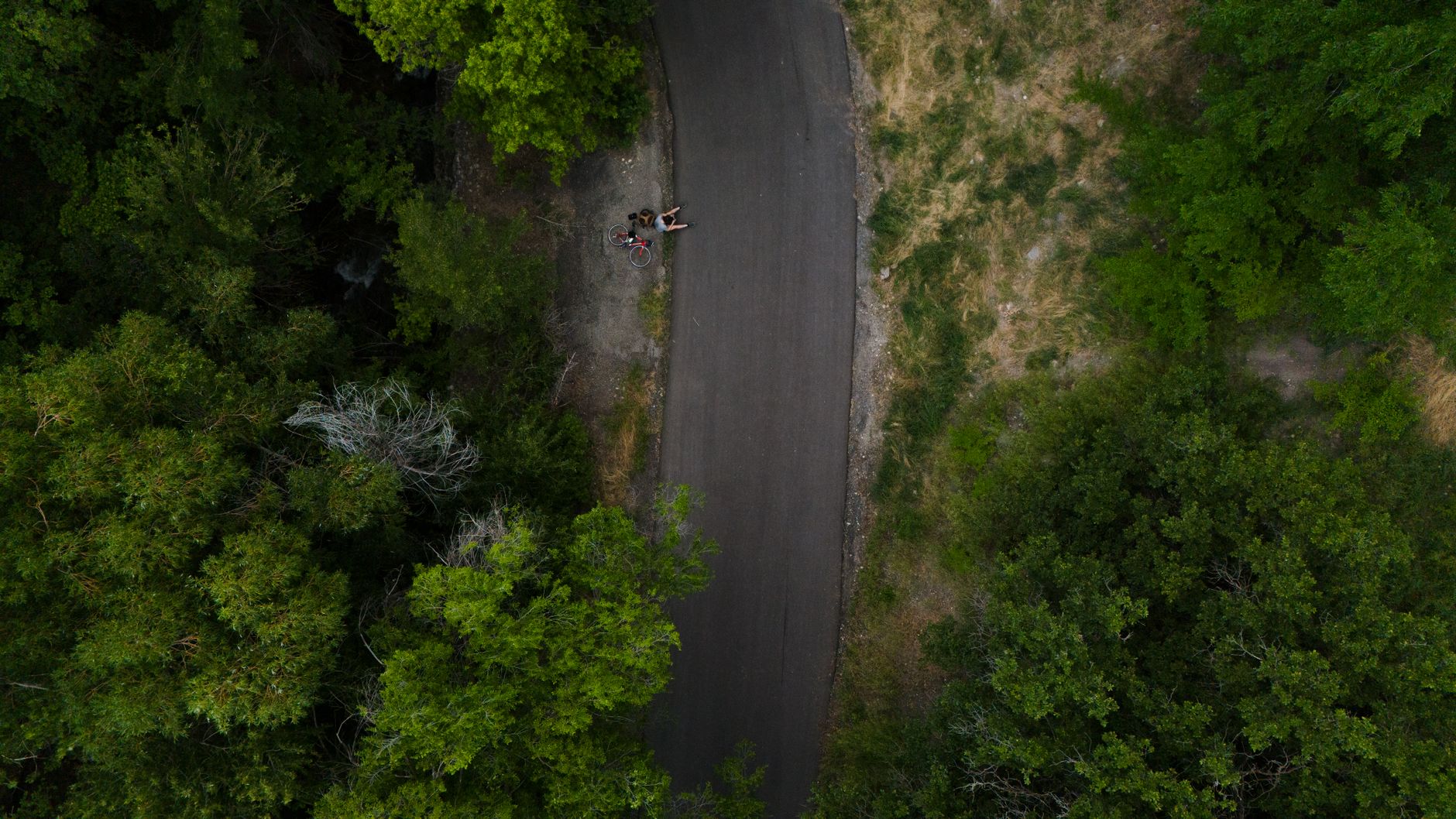
The DJI Mini 4 Pro weighs 249 grams, so it sits just under the FAA registration threshold. You get a 1/1.3-inch CMOS sensor, 4K at 60fps in HDR, and a 34-minute claimed flight time. ActiveTrack 360 lets the drone follow from any direction, circle, or lead from the front. This is the most useful follow mode for solo filming because you can reposition the subject in frame without stopping. It also helps that the Mini 4 Pro fits in a jacket pocket with the standard battery installed. If you travel often, our best travel drones 2026 guide highlights why this size class wins on portability.
In real use the Mini 4 Pro holds a subject well at walking and biking speeds. It slows through narrow gaps because the omnidirectional obstacle sensors are constantly mapping branches and walls. That caution is good for avoiding crashes, but it can be frustrating when you want an aggressive chase shot. The camera cannot match the Air 3S in low light because the sensor is smaller and the aperture is fixed at f/1.7. Still, the 249-gram package delivers far better image quality than any budget follow drone. Check the DJI Mini 4 Pro on Amazon.
Key strengths:
- ✅ Weighs 249 grams, avoiding FAA registration for recreational use
- ✅ ActiveTrack 360 frames subjects from front, back, or orbit
- ✅ 34-minute flight time in ideal conditions
- ✅ Omnidirectional obstacle sensing works well in open terrain
- ✅ Shoots 4K/60 HDR with a 1/1.3-inch sensor
- ❌ Fixed f/1.7 aperture limits low-light control
- ❌ ActiveTrack slows down in dense trees and tight spaces
- ❌ Smaller sensor than the DJI Air 3S
Who it’s for: Solo travelers and hybrid creators who want strong follow mode without crossing the 250-gram registration line.
2. DJI Air 3S , Best dual-camera follow drone
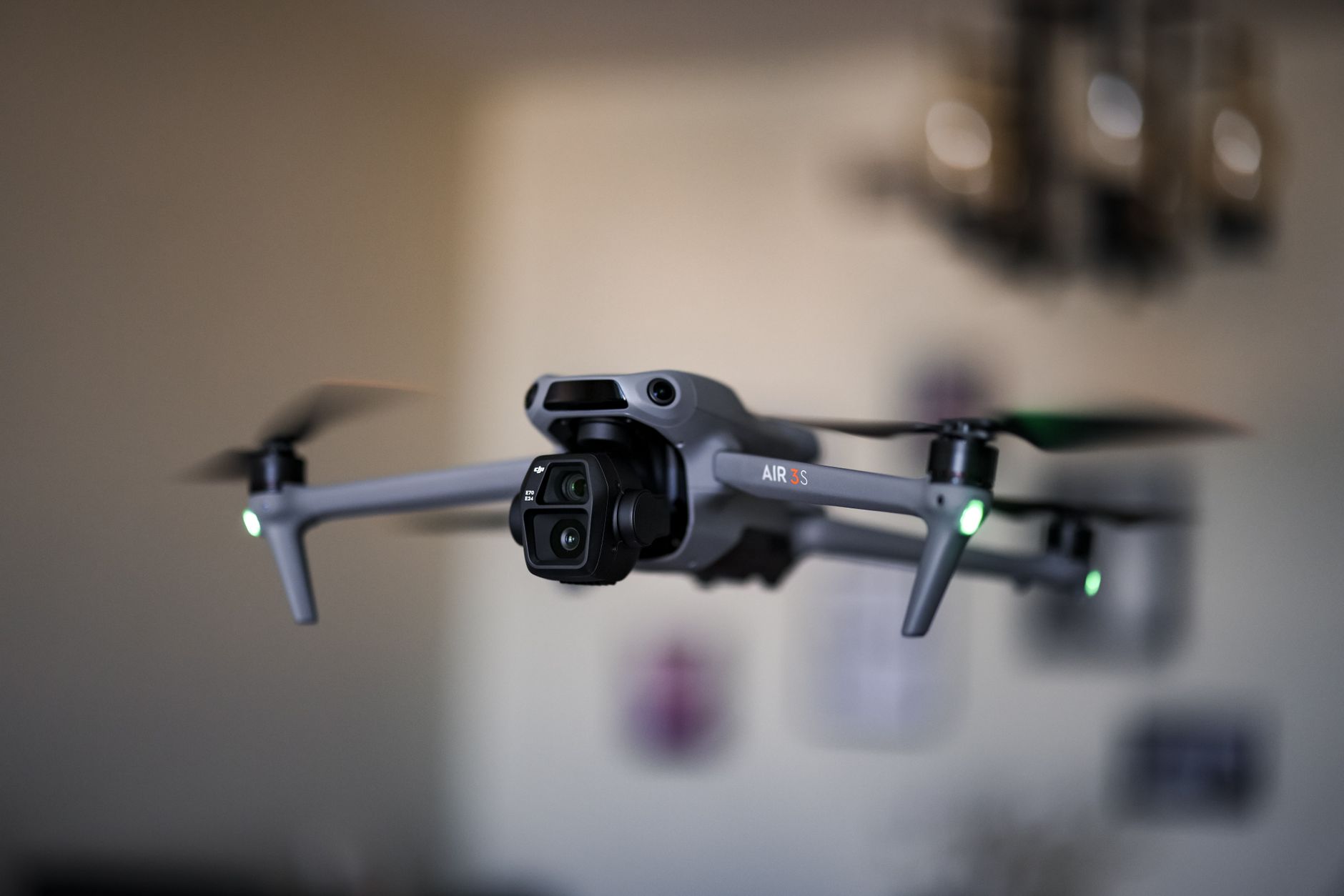
The DJI Air 3S is the best camera drone in this group if you care about image quality. It pairs a 1-inch CMOS main camera with a 70mm medium tele camera, giving you two useful perspectives during a single follow flight. Flight time reaches 45 minutes, and the maximum video resolution is 4K at 120fps on the main sensor. The aircraft weighs 724 grams, so it crosses the FAA registration and Remote ID threshold. That is not a dealbreaker, but you must account for it before flying.
ActiveTrack 360 on the Air 3S is more confident than the Mini 4 Pro because the drone has more power and better wind handling. It can stay locked on a vehicle at higher speeds and hold framing through wider arcs. The 1-inch sensor also gives cleaner footage at dusk. The biggest downside is size and price. You will not slide this into a small bag, and a two-battery kit often costs over $1,300. If your work is mostly slow solo walks, the Mini 4 Pro is enough. If you want real production quality in a follow drone, the Air 3S earns its higher price. Check the DJI Air 3S on Amazon.
Key strengths:
- ✅ Large 1-inch main sensor plus a 70mm tele camera
- ✅ 45-minute flight time, best in this group
- ✅ Shoots 4K/120 slow motion
- ✅ Strong ActiveTrack 360 with solid wind resistance
- ✅ Omnidirectional obstacle sensing for safer tracking
- ❌ 724 grams requires FAA registration and Remote ID
- ❌ Price climbs past $1,300 in useful kits
- ❌ Bulkier than the Mini 4 Pro for travel
Who it’s for: Hybrid shooters who need dual focal lengths and long runtimes for action or vehicle tracking.
3. HoverAir X1 Pro / ProMax , Best palm-launch selfie drone
The HoverAir X1 Pro and ProMax take a different approach. They are palm-launch drones that start and land from your open hand, no controller required. The standard Pro weighs about 192 grams and shoots 4K at 60fps on a 1/2-inch sensor. The ProMax adds a larger sensor and higher resolution for more money. Both are designed for runners, hikers, and vloggers who want to pull a drone out of a pocket, tap a mode, and start recording. This is the closest thing to a truly hands-free follow drone.
Tracking is based on visual AI rather than the deep sensor suite DJI uses. The X1 Pro follows you well on open trails and sidewalks. It does not have omnidirectional obstacle avoidance, so it can hit low branches or street signs if you are not paying attention. Flight time is also short at around 16 minutes, and wind performance is limited. For a quick selfie clip or a short run segment, that may be enough. Just keep the flight simple and stay in open space.
Key strengths:
- ✅ Palm launch and landing without a controller
- ✅ Under 192 grams, no FAA registration needed
- ✅ Very quick setup for solo vlogging
- ✅ Folds small enough for a running belt
- ✅ Decent 4K/60 video for close-range selfie shots
- ❌ No omnidirectional obstacle avoidance
- ❌ 16-minute flight time is short
- ❌ Small sensor and limited wind performance
Who it’s for: Runners, hikers, and vloggers who want instant hands-free footage without a full drone kit.
4. Skydio 2+ , Best obstacle avoidance while following
The Skydio 2+ is still the benchmark for autonomous obstacle avoidance. It uses six 4K navigation cameras to build a 3D map of its surroundings in real time. That lets it follow a mountain biker through tree cover without clipping branches. It weighs 775 grams and flies for about 27 minutes on a battery. The main camera shoots 4K at 60fps, but the sensor is only 1/2.3 inches. Image quality is fine in daylight and noisy in low light.
Skydio has shifted much of its focus to enterprise and government customers. That means consumer support, spare batteries, and firmware updates are not as strong as DJI’s support network. The Skydio 2+ also costs more than the Air 3S in many markets. Despite those issues, no other consumer drone matches its ability to avoid obstacles while tracking a fast subject through a forest. If your footage depends on not crashing, this is the safest follow drone you can buy.
Key strengths:
- ✅ Six navigation cameras provide true 360-degree obstacle avoidance
- ✅ Tracks through dense trees and tight trails better than DJI
- ✅ 4K/60 main camera with solid daylight footage
- ✅ Follows at speeds up to 36 mph
- ✅ Hard to crash, even for new pilots
- ❌ 1/2.3-inch sensor produces noisy low-light video
- ❌ 27-minute flight time trails the Air 3S
- ❌ Consumer availability and support are limited
Who it’s for: Action sports athletes in dense terrain who need the most reliable object tracking and obstacle avoidance.
5. DJI Neo , Best budget follow-me drone
The DJI Neo is the cheapest way to get reliable follow shots. It weighs 135 grams, so it avoids FAA registration and is light enough to survive minor crashes. The Neo shoots 4K at 30fps on a 1/2-inch sensor and flies about 18 minutes per battery. It offers palm launch, voice control, and AI subject tracking with preset modes like Follow, Dronie, Circle, and Spotlight. You can fly it without a controller, or pair it with the DJI RC-N3 for more range.
For the price, the follow mode is impressive but limited. The Neo has no real obstacle avoidance, only a downward sensor for landing. It works best in open areas without branches or power lines. Low light is not its strength, and fast subjects can outrun the tracking at times. Still, if you are new to drones and want a hands-free selfie tool, this is the right starting point. Our best drones for beginners guide covers how it fits into a first-time pilot kit.
Key strengths:
- ✅ 135 grams, no FAA registration
- ✅ $199 entry price is hard to beat
- ✅ Palm launch and voice control work without a controller
- ✅ 4K/30 footage for social clips
- ✅ Light and durable enough for beginners
- ❌ No real obstacle avoidance
- ❌ 18-minute flight time is brief
- ❌ Struggles with fast subjects and low light
Who it’s for: First-time pilots and budget buyers who want hands-free follow shots without spending more than $200.
Frequently Asked Questions
Are drones that follow you legal?
Yes, follow-me drones are legal in the US and Canada for recreational use if you follow local rules. Drones over 250 grams must be registered with the FAA, and most need Remote ID. Keep the drone within visual line of sight even when it is following you.
Do I need a Part 107 license to fly a follow-me drone for social media?
If you only post videos and do not earn money, recreational rules apply. In the US you need the free TRUST certificate. If you make money, you need a Part 107 remote pilot certificate. Canada has basic and advanced pilot certificates for drones over 250 grams.
Which follow-me drone is best in trees?
The Skydio 2+ is the best through trees because its six navigation cameras provide true 360-degree obstacle avoidance. It maps branches in real time and slows or reroutes instead of crashing.
Can follow-me drones avoid obstacles automatically?
High-end models like the DJI Mini 4 Pro, DJI Air 3S, and Skydio 2+ have obstacle sensing. Budget models like the DJI Neo and HoverAir X1 Pro have limited or no forward obstacle avoidance, so you must fly in open areas.
What is the cheapest drone that follows you?
The DJI Neo is the cheapest reliable follow drone at about $199. It shoots 4K/30 and offers palm launch and AI tracking, but it has no real obstacle avoidance.
Do follow-me drones work without a controller?
Some do. The HoverAir X1 Pro and DJI Neo can launch and follow you without a controller. DJI Mini 4 Pro and Air 3S work best with a controller or phone because ActiveTrack requires the DJI Fly app.
What Should You Remember?
- Best overall: The DJI Mini 4 Pro pairs 249-gram weight with 34 minutes of flight and ActiveTrack 360.
- Best camera: The DJI Air 3S shoots 4K/120 on a 1-inch sensor and adds a 70mm tele lens.
- Most autonomous: The Skydio 2+ uses six navigation cameras to track through dense trees safely.
- Best selfie: The HoverAir X1 Pro launches from your palm and films without a controller.
- Best budget: The DJI Neo delivers 4K/30 follow shots for about $199.
- Stay legal: Drones over 250 grams require FAA registration and Remote ID in the US.
This article is for general information only. Drone regulations vary by region and change frequently , always verify current local laws and airspace rules before flying.