Shopping for a drone in 2026 usually means deciding how much of your flying life you want to hand to DJI. The company builds excellent aircraft, and its app, firmware and repair network are why most pilots never look elsewhere. A small group of challengers has grown up anyway, and the Antigravity A1 is one of the louder names in that group. It targets the sub-250-gram class that recreational flyers in the United States can fly without registration, the same slot the DJI Mini series owns. If you fly in the US, the FAA’s drone rules decide what that means for you, Remote ID included. Get that part wrong and the best camera in the world will not help you.
Full disclosure on method. I compared these five on takeoff weight, quoted flight time, sensor size, transmission range, controller design and what happens when something breaks. Spec sheets are a starting point, not the answer. A drone that flies 45 minutes but ships from a warehouse with no spare props is worse than a 30 minute drone with a parts page. I also weighed app behaviour, because a flight app that demands an account and a firmware update before takeoff is a genuine hassle when you have ten minutes of light left. For the wider field, see our roundup of the best DJI alternatives.
The timing matters. Remote ID broadcasts are now standard in most markets, so every flight leaves a public trail. Canada splits flying into basic and advanced operations, and the paperwork follows the pilot rather than the aircraft, which you can read about in Transport Canada’s drone safety rules. That changes how people buy. A beginner who only wants cliff-top footage can stay under 250 grams and skip most of it, while anyone shooting paid work should start with the licence instead of the drone. We cover that path in our guide to drones for beginners.
Here is the honest setup. The Antigravity A1 is a credible sub-250-gram camera drone with a few real advantages over DJI and a longer list of small annoyances. DJI still wins on polish, sensors and service. Two alternatives below beat both at specific jobs. The Air 3S wins on paid aerial work, and the HoverAir X1 ProMax wins on hands-free follow shots. None of the five is a bad buy. The wrong choice is spending on a drone whose rules and workflow you will not keep up with.
How Do the Top Options Compare?
| Drone | Best For | Weight | Flight Time | Camera | Price |
|---|---|---|---|---|---|
| Antigravity A1 | Pilots who want out of DJI’s app and geofencing rules | Under 250 g | About 30 min | 4K on a stabilized gimbal | Check price |
| DJI Mini 5 Pro | Best all-round sub-250 g drone | 249 g | Up to 52 min | 1-inch CMOS, 4K 60fps HDR | Check price |
| DJI Air 3S | Paid aerial photo and video work | 724 g | Up to 45 min | 1-inch wide plus 1/1.3-inch tele | Check price |
| Autel EVO Lite+ | Low-light shooting without enforced geofences | 835 g | Up to 40 min | 1-inch CMOS, 6K, adjustable aperture | Check price |
| HoverAir X1 ProMax | Hands-free follow shots on the move | 192 g | Up to 16 min | 1/1.3-inch sensor, up to 8K | Check price |
Weights are takeoff weights with the standard battery and can vary by a few grams between production batches. Flight times are manufacturer figures measured in calm air at a steady cruise, so expect less in wind or cold. Prices move constantly, which is why every row links to a live listing instead of a number. Rules differ by country and by whether you fly for fun or for money, so confirm your local requirements before your first flight.
1. Antigravity A1 , Best for Pilots Who Want Out of DJI’s App and Geofencing Rules
The Antigravity A1 is a folding camera drone built for the same buyer as the DJI Mini line. It stays under 250 grams, which keeps recreational flyers in the United States out of the registration system, and it folds small enough to ride in a jacket pocket. Antigravity quotes flight time in the low 30 minute range and a transmission range near 10 km, so the spec sheet reads like a Mini 4 Pro with a different badge. The camera sits on a stabilized gimbal and records 4K footage.
Where the A1 separates itself is software policy. There is no account gate before takeoff, and geofencing is advisory rather than enforced in firmware. Pilots who file LAANC authorizations around controlled airspace will appreciate that. Pilots who ignore airspace rules will not, and no drone brand can turn an illegal flight into a legal one. The A1 also skips the forced firmware treadmill that grounds DJI aircraft until an update finishes installing.
The tradeoffs show up after the sale. Antigravity has a much smaller service network, fewer spare parts sitting on shelves, and a shorter firmware track record. Break a gimbal in July and you may be waiting into August. That matters more than any spec sheet number. If you travel with a drone, read our guide to the best travel drones before you commit, because folded size and airline battery rules change the maths. Check the Antigravity A1 on Amazon to see what is currently in stock.
Key strengths:
- ✅ Under 250 grams, which keeps US recreational flyers out of the registration step entirely.
- ✅ No account requirement in the flight app, so you can launch without a login screen.
- ✅ Advisory geofencing instead of enforced blocking, useful for pilots flying under a LAANC authorization.
- ✅ Folding frame fits a jacket pocket next to a phone and two spare batteries.
- ✅ Cheaper entry point than the equivalent DJI model.
- ❌ Service network is thin, so a crash can mean weeks without parts.
- ❌ Accessory range is small and third-party props or ND filters are hard to find.
- ❌ Shorter firmware history means early bugs are more likely and fixes arrive slower.
Who it’s for: Pilots who want a pocketable camera drone and do not want DJI’s app account and hard geofencing deciding when they can take off.
2. DJI Mini 5 Pro , Best All-Round Sub-250g Drone
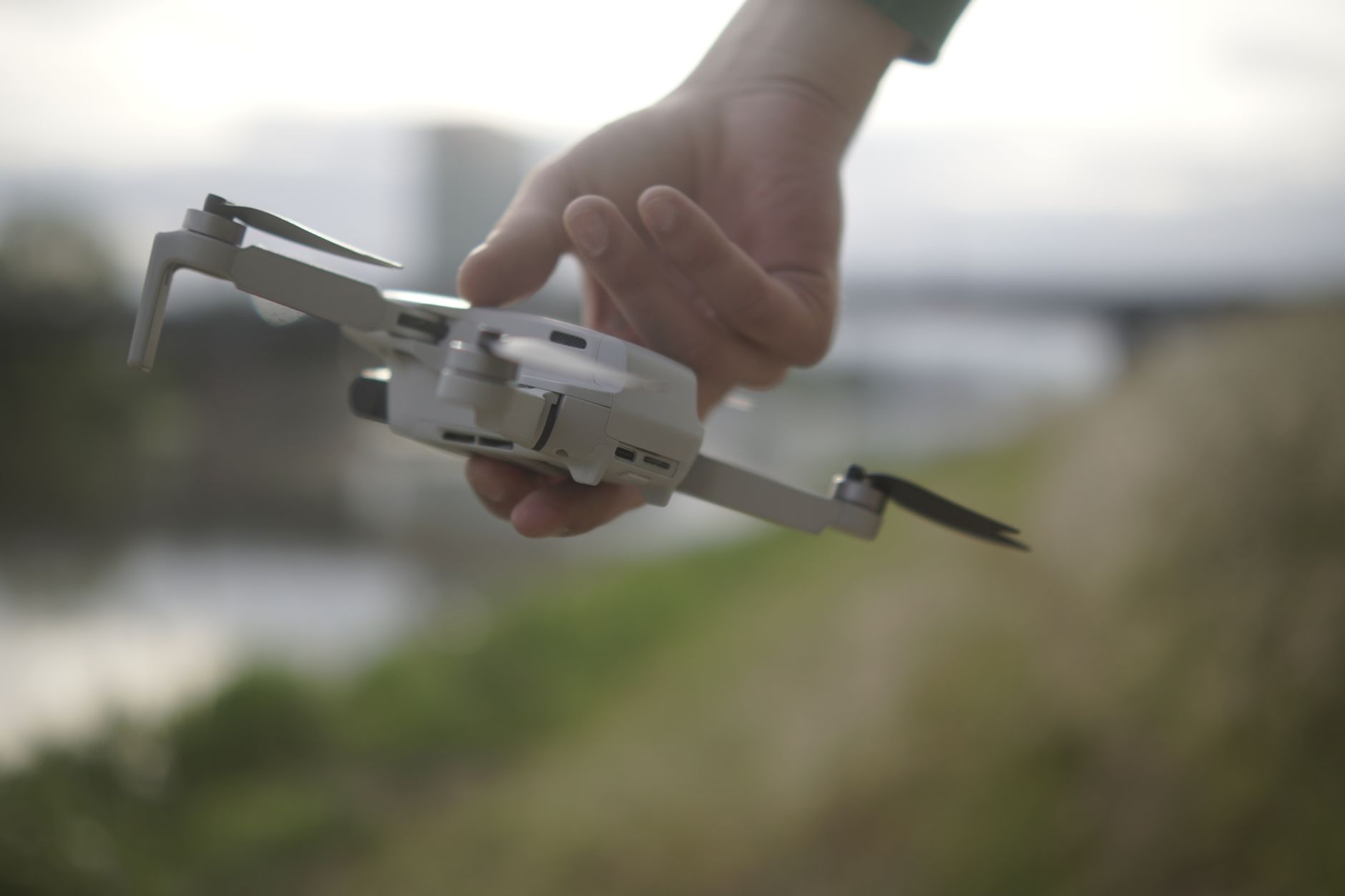
The Mini 5 Pro is the drone the A1 gets measured against, and on hardware it is not a close fight. DJI packs a 1-inch CMOS sensor into a 249 gram airframe and rates flight time at up to 52 minutes. That is a full inch of sensor and a battery figure close to double what most sub-250 gram rivals manage. Video tops out at 4K 60fps with HDR, and the gimbal holds a level horizon in wind that pushes lighter aircraft around.
Obstacle sensing is the other gap. The Mini 5 Pro carries omnidirectional sensors plus forward LiDAR, so it slows or stops before it reverses into a tree. The A1 relies on a simpler setup. If you fly close to buildings for property or inspection work, that difference pays for itself the first time it saves a prop or a gimbal. Our DJI Mini 5 Pro review walks through the flight modes and the annoyances in more detail.
The costs are not only financial. DJI’s app requires an account, and firmware updates can block takeoff until they install. Hard geofencing can also refuse a launch inside a zone you are legally cleared to enter with an authorization. The company publishes the full spec sheet at dji.com. For most buyers the polished app and the global parts supply outweigh those frustrations. Check the DJI Mini 5 Pro on Amazon to compare bundles before you buy.
Key strengths:
- ✅ A 1-inch sensor in a 249 gram body is the best image quality available under the US registration line.
- ✅ DJI rates flight time at up to 52 minutes, roughly three times the HoverAir’s figure.
- ✅ Omnidirectional sensing with forward LiDAR makes low-altitude flying far less stressful.
- ✅ Batteries, props, filters and repair options are available almost everywhere.
- ✅ Foldable design and a mature app that most pilots already know how to use.
- ❌ Mandatory firmware and app updates can block a flight you already planned.
- ❌ Hard geofencing can prevent takeoff in places where you hold a valid authorization.
- ❌ Out-of-warranty repairs are slow and expensive outside major service regions.
Who it’s for: Almost anyone buying a first serious drone who wants the best image quality allowed under 250 grams and does not mind DJI’s software rules.
3. DJI Air 3S , Best for Paid Aerial Photo and Video Work
If your drone work pays, the Air 3S is the step most pilots take after a Mini. It weighs 724 grams and flies for up to 45 minutes, which means it holds position in wind that keeps a 249 gram drone on the ground. The dual camera array pairs a 1-inch wide sensor with a 1/1.3-inch medium telephoto, so you can shoot a wide establishing frame and a compressed detail shot on the same battery. No aircraft swap, no lost time on a client shoot.
Transmission range is rated at 20 km, and the practical result is a stable feed at distances most hobby pilots never need. The package is aimed at people who want 10-bit colour and enough dynamic range to rescue a blown sky in editing. For wedding, inspection and property work, this is the least compromised option in the group.
Two rules come with the extra weight. In the United States, anything over 250 grams must be registered, and Remote ID applies. Paid work also requires a Part 107 certificate, which means a written exam and a background check rather than a formality. Budget for that licence before you budget for the aircraft. Check the DJI Air 3S on Amazon when you are ready for the step up.
Key strengths:
- ✅ Dual cameras give you a 1-inch wide lens and a medium telephoto in one flight.
- ✅ Up to 45 minutes of flight time at a 724 gram takeoff weight.
- ✅ Rated 20 km transmission range for long-distance work.
- ✅ Handles gusty conditions far better than any sub-250 gram drone here.
- ✅ 10-bit colour and strong dynamic range for client deliverables.
- ❌ At 724 grams it needs registration and Remote ID in the US.
- ❌ Commercial use means a Part 107 certificate, so add study time to the plan.
- ❌ Costs far more than a beginner should spend on a first drone.
Who it’s for: Working pilots and serious hobbyists who shoot for clients and need dual focal lengths and wind resistance.
4. Autel EVO Lite+ , Best for Low-Light Shooting Without Enforced Geofences
Autel has spent years as the credible second choice, and the EVO Lite+ is the model that keeps that reputation alive. It carries a 1-inch sensor with an adjustable aperture running from f/2.8 to f/11, which is rare on a drone and genuinely useful when light drops at the end of a shoot. Video goes up to 6K, and flight time is rated at up to 40 minutes.
The feature that pulls buyers away from DJI is the absence of enforced geofencing. Autel warns you about restricted areas and then lets you make your own decision. Commercial pilots working under an authorization find that removes a layer of frustration. Everyone else loses a safety net, because the rules still apply to the pilot no matter what the app allows. Read the best drones for aerial photography with that in mind if you shoot for clients.
At 835 grams the Lite+ needs registration in the US and broadcasts Remote ID like every other aircraft in this class. Autel’s app updates land slower than DJI’s, and spare parts are harder to find outside the US and EU. The camera is the reason to buy it. The support network is the reason to think twice.
Key strengths:
- ✅ 1-inch sensor with an adjustable f/2.8 to f/11 aperture that shines in low light.
- ✅ Up to 40 minutes of flight time on a single battery.
- ✅ No enforced geofencing, so firmware will not block a legal flight.
- ✅ 6K video capture leaves room to crop without losing resolution.
- ✅ SkyLink transmission holds a stable feed at long range in open country.
- ❌ 835 grams puts it in the registration and Remote ID category in the US.
- ❌ Firmware and app fixes arrive more slowly than DJI’s.
- ❌ Spare parts and service centres are limited outside major markets.
Who it’s for: Photo-focused pilots who shoot in dim light and want a drone that will not refuse a takeoff the app disagrees with.
5. HoverAir X1 ProMax , Best for Hands-Free Follow Shots
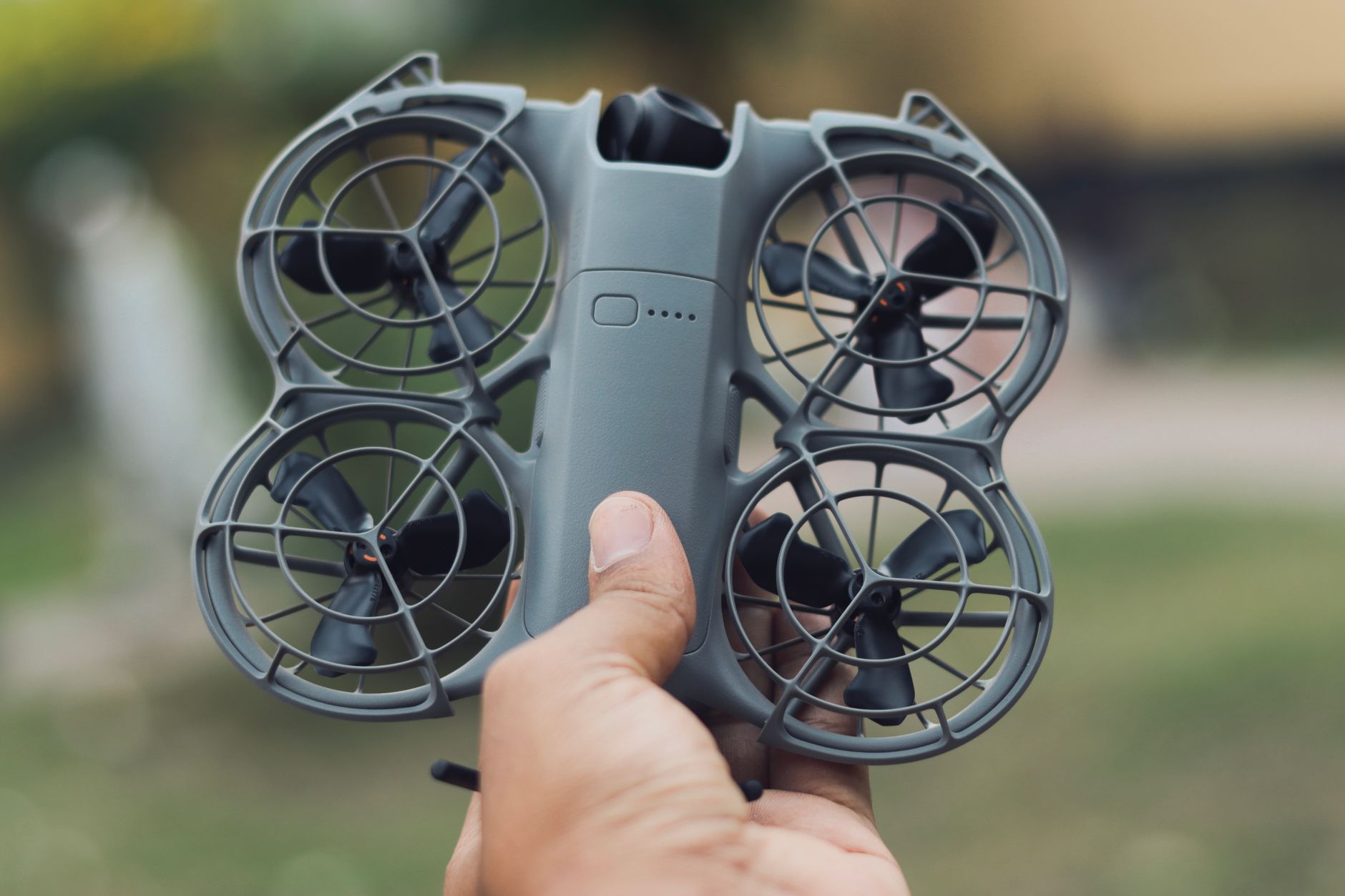
The X1 ProMax is a different kind of drone. It weighs 192 grams, ships without a controller, and launches from your open palm. Press a button, it lifts off, runs a preset flight path and lands back in your hand. Follow modes track a runner, a cyclist or a skier without a second operator, which is the entire point of the design.
The ProMax version carries a 1/1.3-inch sensor and records up to 8K, a real step up from the smaller sensor on the standard X1 Pro. It handles more wind than its weight suggests, and the folded body lives in a hip pocket rather than a camera bag. Flight time is the catch. Around 16 minutes per battery in calm air, and cold weather or hard manoeuvring cuts that further.
Think of it as a follow camera, not an aerial platform. There is no long-range manual control, no waypoint missions for survey work, and no battery system that gets you through a long day. Buy two or three packs if you plan to be out for hours. For travel, cycling and family footage where nobody wants to fly a drone, the X1 ProMax does a job the others cannot.
Key strengths:
- ✅ 192 grams with no controller needed, so you launch and land from your palm.
- ✅ Built-in follow modes track a subject without a second operator.
- ✅ 1/1.3-inch sensor with up to 8K recording on the ProMax model.
- ✅ Fits in a hip pocket, which means you actually carry it.
- ✅ Under 250 grams, so US recreational flyers skip registration.
- ❌ Flight time tops out around 16 minutes in calm air.
- ❌ No long-range manual control, so it is a follow cam rather than a survey tool.
- ❌ You need two or three batteries to cover a full session.
Who it’s for: Cyclists, runners, skiers and travellers who want footage of themselves moving and have no interest in flying a drone manually.
Frequently Asked Questions
Is the Antigravity A1 better than a DJI drone?
For app freedom and geofencing behaviour, yes. For image quality, spare parts and service, no. DJI’s Mini 5 Pro pairs a 1-inch sensor with a rated 52 minutes of flight time, while the A1 sits around the 30 minute mark with a smaller sensor. Most pilots are better served by DJI unless they specifically want the A1’s software behaviour.
Do I need to register a drone under 250 grams?
In the United States, recreational flyers do not need to register a drone that weighs under 250 grams, and the Antigravity A1 and HoverAir X1 ProMax both sit under that line. Any drone used for paid work must be registered regardless of weight, and heavier models are registered through the FAA’s DroneZone system.
What is Remote ID and does it apply to me?
Remote ID is a broadcast that identifies your drone and its location during flight. It applies to most drones flying in US airspace, including some models under 250 grams, unless you are flying at an FAA-Recognized Identification Area. If your aircraft does not broadcast, you can attach an external module.
Which of these five is best for a total beginner?
The DJI Mini 5 Pro is the easiest to fly and the easiest to repair. The Antigravity A1 is a reasonable second choice if you dislike DJI’s app. The HoverAir X1 ProMax is the least intimidating of all, because it flies itself and asks nothing of your stick skills.
Can I fly any of these drones commercially in the US?
Yes, but you need a Part 107 Remote Pilot Certificate first. That applies to any flight that supports a business, including free work you do to promote your own company. The drone itself must also be registered, and the heavier models here need standard registration rather than the recreational exemption.
How long do the batteries really last?
Manufacturer flight times are measured in calm air at a steady cruise, so plan on 20 to 30 percent less in wind or cold. The HoverAir’s 16 minutes can drop below 12 in winter. Carry a spare and store batteries at roughly half charge if you will not fly for a week.
What Should You Remember?
- Weight decides your paperwork. Staying under 250 grams keeps US recreational flyers out of registration, but Remote ID still applies in most airspace.
- Flight time claims are optimistic. Expect 20 to 30 percent less than the rated figure in wind, cold weather or aggressive flying.
- DJI still leads on hardware. The Mini 5 Pro pairs a 1-inch sensor with a 249 gram takeoff weight, and nothing else here matches that combination.
- The Antigravity A1 sells software freedom. No account gate and advisory-only geofencing are real advantages for pilots flying under an authorization.
- Buy for the job, not the spec sheet. Follow shots, paid client video and travel footage point to three different aircraft.
- Budget for spares. Two extra batteries and a prop set cost far less than one out-of-warranty repair.
This article is for general information only. Drone regulations vary by region and change frequently , always verify current local laws and airspace rules before flying.