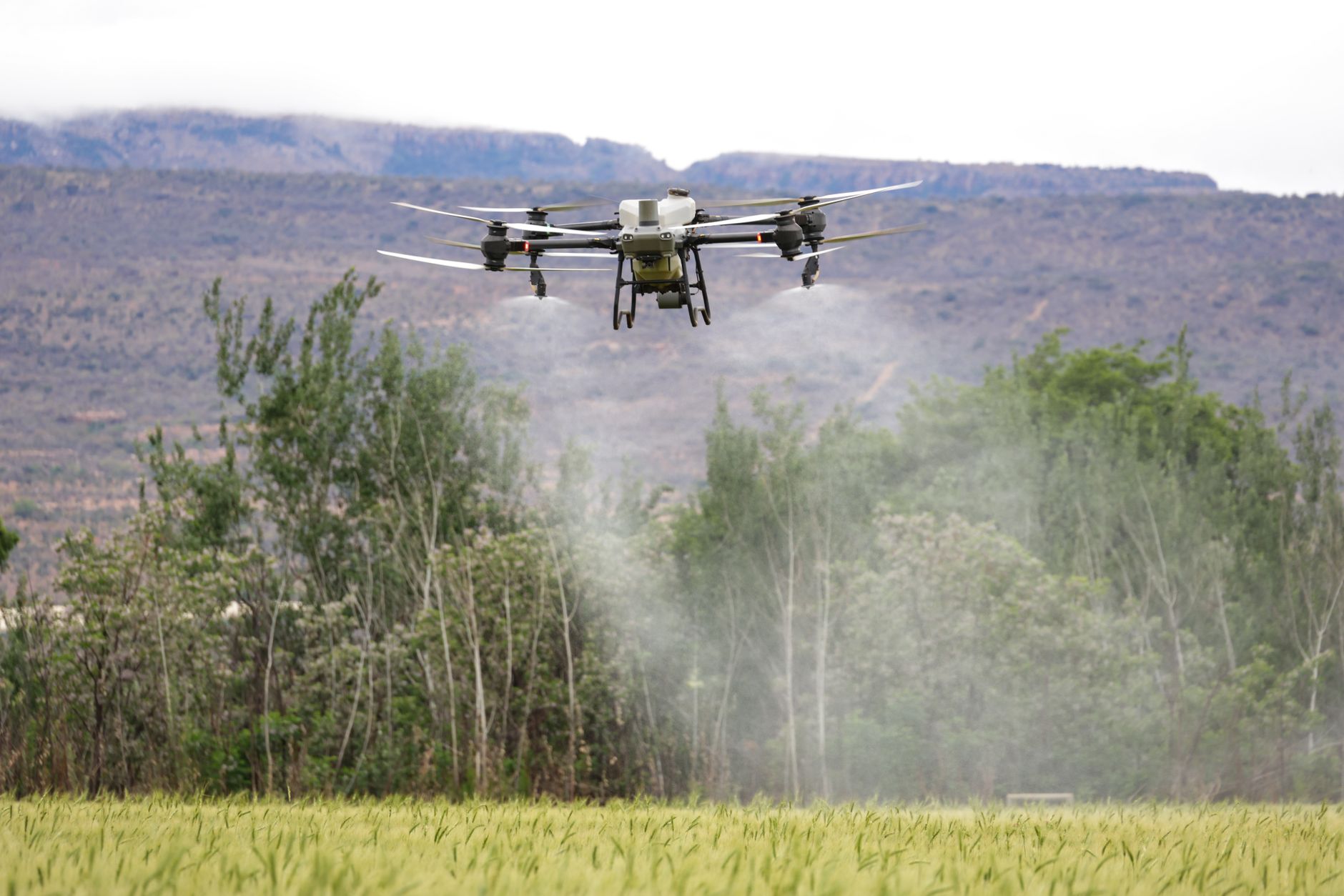
Crop spraying drones have moved from demo plots to daily farm work. In 2026, a 40-liter spray drone can cover 15 to 20 acres per hour, which beats a backpack sprayer by a wide margin. The catch is that these are not weekend drones. Under FAA’s drone rules, commercial spraying operations require a Part 107 remote pilot certificate, and most agricultural spray drones need FAA registration because they exceed 55 pounds. Some states also require an agricultural aircraft operator certificate. Before spending $20,000 or more, check drone laws in the USA to understand your operating limits.
We compared five machines based on tank capacity, flow rate, radar, price, and real-world serviceability. A drone that holds 40 liters is useless if you cannot get parts in March. We also looked at battery logistics. Spray drones burn through packs fast, so chargers, generators, and drone battery care matter as much as the airframe. Our picks include DJI, XAG, Hylio, and EAVision because those brands have dealer support in North America. Field results from working operators shaped the final ranking more than spec sheets. That means real fuel loads, real chemical mixes, and real field obstacles.
This year’s big shift is smarter spraying. DJI and XAG both use phased array radar to keep the boom height steady over uneven ground. That reduces drift and saves chemical. Several models now support variable-rate application, so you can load a prescription map and let the drone adjust flow. If you are coming from a DJI camera drone, the software feels familiar. Start with our DJI drones compared guide to see how the Agras line fits into the wider DJI family. If you want a non-DJI option, read best DJI alternatives. The choice is no longer limited to one manufacturer. This matters for pricing.
Price remains the main gate. A ready-to-fly heavy spray drone with batteries and a charger costs between $18,000 and $35,000. Add a trailer, generator, and mixing tank and you are looking at $45,000 to $60,000. But the per-acre economics work for row crops, orchards, and rice. The right accessories matter too, from quick-fill pumps to spare propeller sets. We covered the must-haves in best drone accessories. Now let’s get into the specific machines. Each one below earned its place for a different farming need. That detail matters when you are writing a check this size. Choose carefully.
How Do the Top Options Compare?
| Drone | Best For | Tank Capacity | Flight Time | Price (USD) |
|---|---|---|---|---|
| DJI Agras T50 | Heavy spraying and spreading | 40 L spray, 50 kg spread | 9 to 15 min | $25,000 est. |
| XAG P100 Pro | Variable-rate precision spraying | 40 L | 10 to 15 min | $22,000 est. |
| DJI Agras T25 | Small farms and tight fields | 20 L spray, 25 kg spread | 8 to 12 min | $15,000 est. |
| Hylio AG-272 | US-built custom application | 27 L | 10 to 14 min | $28,000 est. |
| EAVision EA-30X | Hilly terrain and orchards | 30 L | 12 to 15 min | $28,000 est. |
Prices are estimated base kits and vary by dealer, battery count, and market. Flight times assume full payload and standard battery packs.
1. DJI Agras T50 , Best all-around heavy crop sprayer
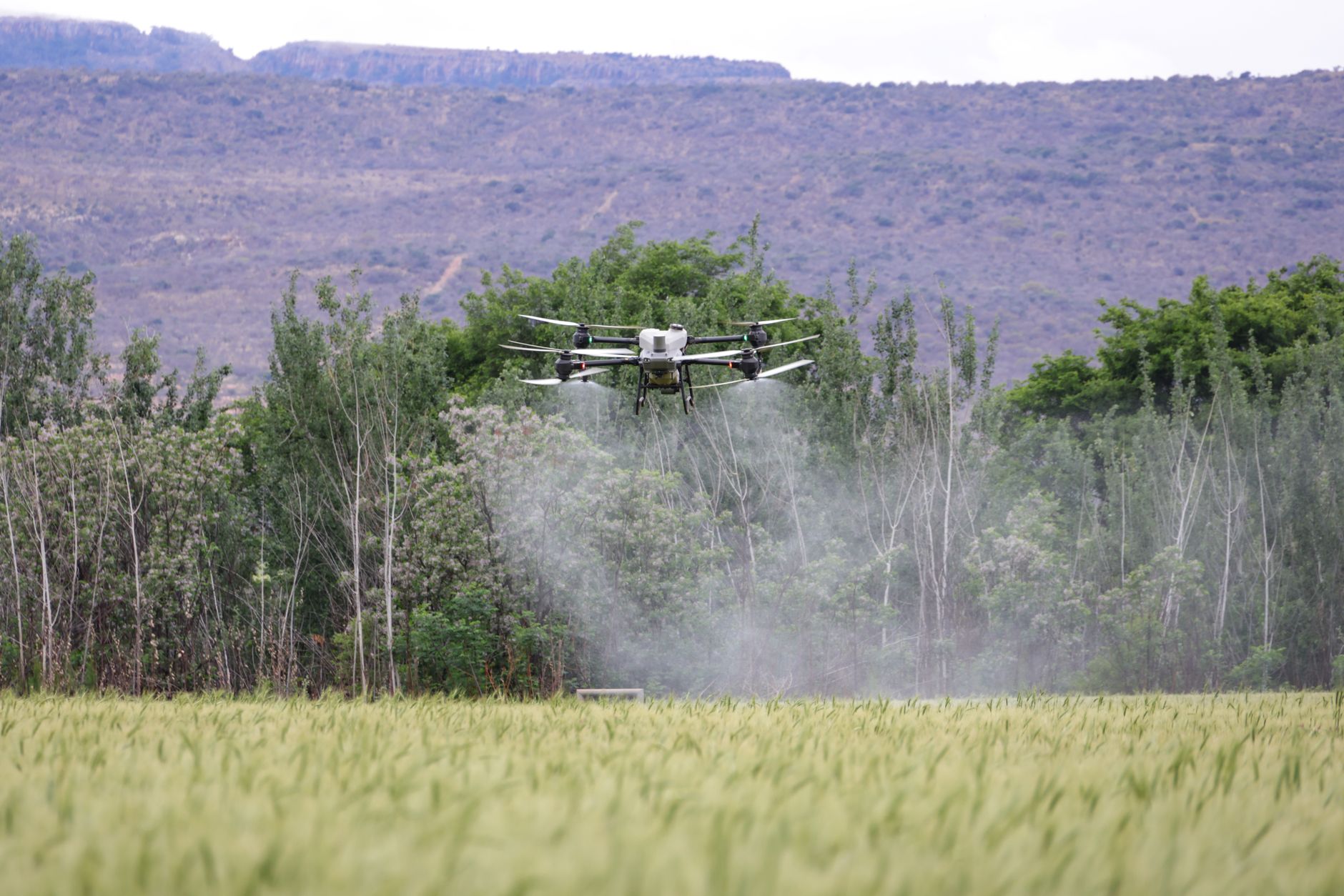
The Agras T50 is the default choice for many commercial operators in 2026. It carries up to 40 liters as a sprayer and 50 kilograms as a spreader, so you can handle both liquid fertilizer and dry seed. At full load, expect 9 to 11 minutes of flight time. With a lighter payload, that stretches closer to 15 minutes. The T50’s twin rotors and active phased array radar keep it stable over rolling ground.
Charging matters. You will want a generator and a stack of batteries because one pack only lasts about 10 minutes at full load. The T50 uses DJI’s familiar remote and app, so anyone who has flown a Mavic will recognize the interface. Our DJI drones compared guide explains the shared controller system. For official specs, check DJI.
Downsides are real. The T50 is heavy, and its case takes up a full truck bed. Service through DJI Agriculture dealers is good in most regions, but replacement parts can take time during spring rush. Check the DJI Agras T50 on Amazon.
Key strengths:
- ✅ 40 L tank covers more acres per fill
- ✅ Dual spray and spread payloads
- ✅ Phased array radar holds terrain height
- ✅ DJI dealer network is wide
- ❌ Battery life drops fast under full load
- ❌ Heavy transport case
- ❌ Parts can lag during peak season
Who it’s for: Choose the T50 if you want one heavy drone that sprays and spreads across medium to large fields.
2. XAG P100 Pro , Best for precision variable-rate spraying
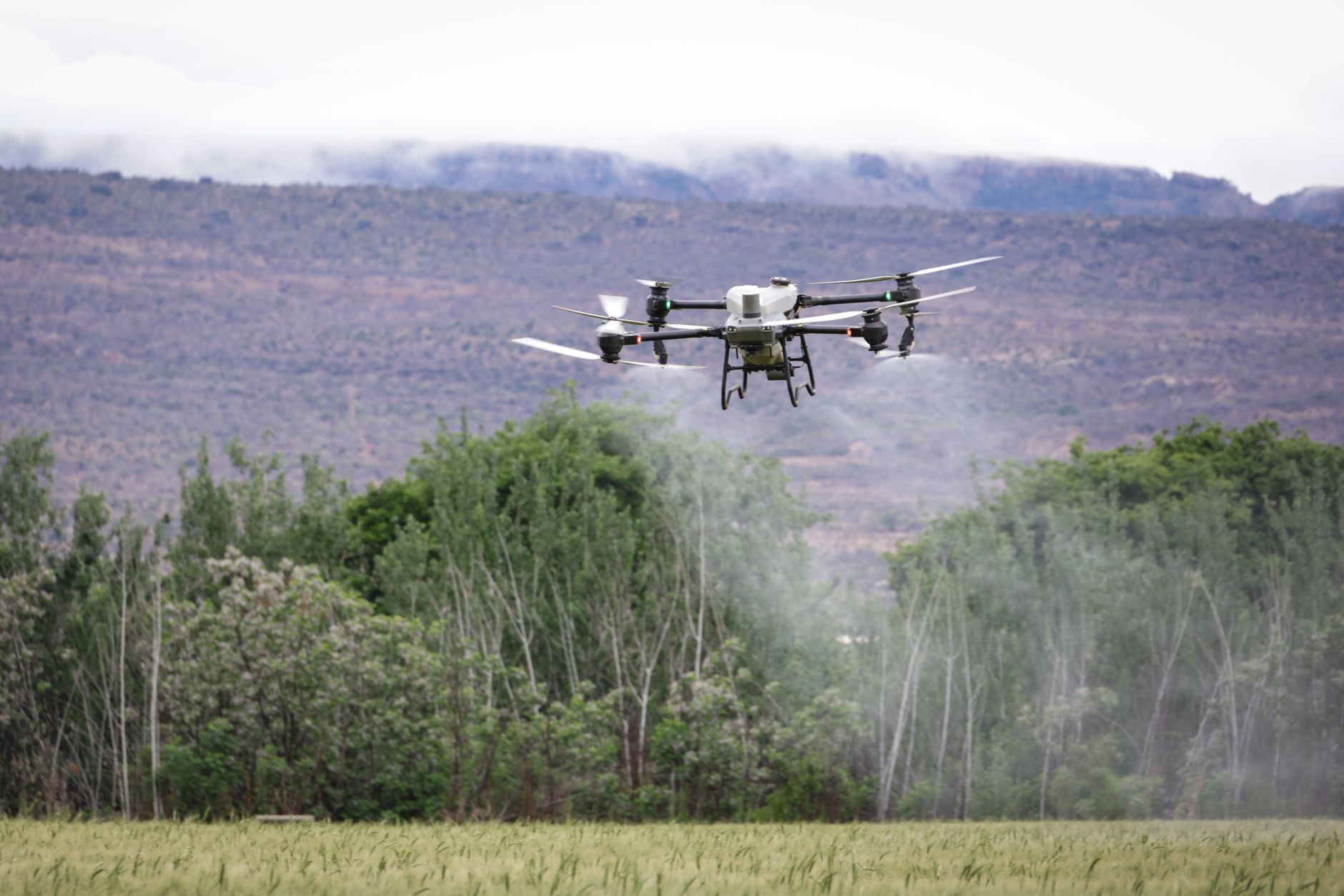
XAG builds spray drones first, not camera drones. The P100 Pro carries 40 liters and uses two peristaltic pumps to move liquid at a steady rate. Terrain-following radar scans the crop every few milliseconds. That stability pays off when you spray rice or vegetables where boom height changes quickly.
Compared to DJI, XAG’s software is more agronomy-focused. You can load prescription maps, adjust droplet size, and track flow rate field by field. If you want a non-DJI platform, our best DJI alternatives guide breaks down the options. Flight time at full load is around 10 to 12 minutes.
The main drawback is support in North America. XAG has dealers in many states, but not as many as DJI. Some operators also find the interface less beginner-friendly. Check the XAG P100 Pro on Amazon.
Key strengths:
- ✅ Precise variable-rate application
- ✅ Steady flow from dual pumps
- ✅ Strong radar for uneven terrain
- ✅ Good for prescription maps
- ❌ Smaller North American dealer network
- ❌ Interface has a learning curve
Who it’s for: Pick the XAG P100 Pro if you need prescription-driven spraying and already have agronomy software experience.
3. DJI Agras T25 , Best compact spray drone for small farms
The T25 is a smaller, lighter Agras that still does real work. It holds 20 liters of liquid or 25 kilograms of dry material. That is half the T50, but also about 10 kilograms lighter. Lighter weight means easier transport and less stress on batteries. Expect 8 to 12 minutes per flight depending on load.
For a 50-acre vegetable farm or a vineyard, the T25 is often the smarter buy. It fits in a pickup bed and costs significantly less than the T50. You lose the big tank, but you gain agility in tight rows.
The trade-off is speed. You will refill more often on big fields. If you farm more than 200 acres, the T25 becomes a bottleneck.
Key strengths:
- ✅ Easier to transport
- ✅ Lower upfront cost
- ✅ Handles tight rows well
- ✅ Uses DJI app and controller
- ❌ Smaller 20 L tank
- ❌ Less efficient on large fields
Who it’s for: Pick the T25 if you run a small farm, orchard, or vineyard and need a spray drone that fits in a truck.
4. Hylio AG-272 , Best US-built option for custom applications
Hylio is a Texas company building spray drones for American farms. The AG-272 carries a 27-liter tank and can be paired with Hylio’s ground station for semi-autonomous missions. Because Hylio is US-based, parts and service can be faster for operators in the United States.
Capacity sits between the DJI T25 and T50. Flight time runs around 10 to 14 minutes. Hylio advertises swath widths up to 30 feet, which helps in broad fields. The company also offers custom nozzle setups for different chemicals.
The downside is price and scale. Hylio costs more than comparable Chinese-built drones, and dealers are fewer outside the US. You should also confirm how the FAA treats your operation. For Canadian readers, Transport Canada’s drone safety rules have their own requirements.
Key strengths:
- ✅ US-based parts and support
- ✅ Semi-autonomous mission options
- ✅ Custom nozzle configurations
- ✅ Faster US service
- ❌ Higher price than import options
- ❌ Limited dealer network outside US
Who it’s for: Choose Hylio if you want a US-built machine and faster local support for row crops.
5. EAVision EA-30X , Best for hilly terrain and orchards
EAVision specializes in steep terrain. The EA-30X has a 30-liter tank and a flight controller tuned for slopes and terraces. Its radar can follow ground at high angles, which matters in orchards and mountain rice paddies. Flight time at full load is around 12 to 15 minutes.
The spray system uses high-pressure nozzles to push droplets into dense canopies. That helps with citrus and nut trees where ordinary drones leave the lower leaves dry. For thermal inspection of irrigation or crop stress, see our best thermal drones guide.
The EA-30X is not as common as DJI or XAG. Training and parts are more limited. But for steep ground, few machines match its terrain following.
Key strengths:
- ✅ Excellent slope and terrain following
- ✅ High-pressure nozzles for canopy penetration
- ✅ 30 L tank balances size and payload
- ✅ Good for orchards
- ❌ Limited dealer and training network
- ❌ Not as common as DJI or XAG
Who it’s for: Pick the EA-30X if you spray steep orchards or terraced fields and need strong terrain following.
Frequently Asked Questions
Do I need a license to fly a crop spraying drone?
Yes. In the United States, commercial spraying requires a Part 107 remote pilot certificate. Drones over 55 pounds also need FAA registration and may require an agricultural aircraft operator certificate or exemption. Check the FAA UAS rules before you buy.
Can I fly an agricultural drone under recreational rules?
No. Crop spraying is a commercial operation. You cannot operate under the recreational exemption, and the FAA TRUST certificate does not cover spraying for hire.
How do Canadian rules differ for spray drones?
In Canada, drone pilots must follow Transport Canada drone safety rules. You need a drone pilot certificate for basic or advanced operations, plus a Special Flight Operations Certificate for many agricultural spraying missions depending on weight and operation.
How many acres can a spray drone cover per hour?
Most 30 to 40 liter spray drones cover 10 to 20 acres per hour depending on swath width, flow rate, battery swaps, and terrain. Smaller 20 liter drones cover closer to 8 to 12 acres per hour.
What is the biggest operating cost?
Batteries and chargers are the biggest ongoing cost. Heavy spray drones wear through battery packs quickly, so budget for spare packs, a generator, and proper battery care.
How much does a crop spraying drone cost?
A ready-to-fly system usually costs $15,000 to $35,000. Adding a trailer, generator, mixing tank, and spare batteries pushes the total toward $45,000 to $60,000.
What Should You Remember?
- Tank capacity drives efficiency. A 40 L drone refills half as often as a 20 L model on big fields.
- Part 107 is required for commercial crop spraying in the US.
- Flight time is short. Expect 8 to 15 minutes at full payload, so plan battery swaps.
- Radar matters. Terrain-following radar reduces drift and keeps spray height steady.
- Dealer support can beat raw specs. Parts and service matter in spring.
- Budget for accessories. Chargers, generators, and spare batteries often add $10,000 to $20,000.
This article is for general information only. Drone regulations vary by region and change frequently — always verify current local laws and airspace rules before flying.